


LIBRO INGLESE




Connectionist Modelling in Cognitive Neuropsychology: A Case Study: A Special Issue of Cognitive Neuropsychology

62,60 €
+630
punti 
Venditore: Feltrinelli
Articolo acquistabile con Carta del Docente

Articolo acquistabile con Carta Cultura Giovani e Carta del Merito

Articolo acquistabile con Carta della Cultura

Paga con Klarna in 3 rate senza interessi per ordini superiori a 39 €

Dati e Statistiche
 Salvato in 0 liste dei desideri
Salvato in 0 liste dei desideri
Connectionist Modelling in Cognitive Neuropsychology: A Case Study: A Special Issue of Cognitive Neuropsychology
Disponibilità in 2 settimane
62,60 €
62,60 €
Disponibilità in 2 settimane
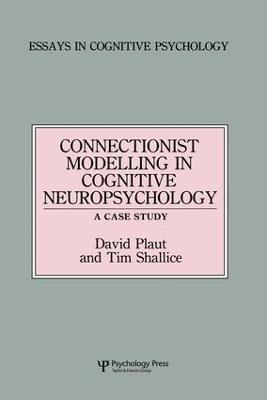


Computational models offer tools for exploring the nature of human cognitive processes. In connectionist, neural network, or parallel distributed processing models, information processing takes the form of cooperative and competitive interactions among many simple, neuron-like processing units. These models provide new ways of thinking about the neural basis of cognitive processes, and how disorders of brain function lead to disorders of cognition. This monograph is an expanded version of a recent issue of the journal Cognitive Neuropsychology. It presents the most comprehensive existing "case study" of how the effects of damage in connectionist models can replicate the detailed and diverse patterns of cognitive impairments that can arise in humans as a result of brain damage. It begins with a review of the basic methodology of cognitive neuropsychology and of other attempts at modeling neuropsychological phenomena. It then focuses on a particular form of acquired reading disorder, "deep dyslexia," in which previously literate adults with brain damage exhibit a wide range of symptoms in pronouncing written words, the most striking of which is the production of semantic errors (e.g. reading RIVER as "ocean"). A series of simulations investigate the effects of damage in connectionist models that pronounce written words via their meaning. The work systematically explores each main aspect of the design of the models, identifying the basic computational properties that are responsible for the occurrence of deep dyslexia when the models are damaged. Although the investigation concerns a specific form of reading impairment, the computational principles that emerge as critical are very general ones: representation of concepts as distributed patterns of activity, encoding of knowledge in terms of weights on connections between units, interactivity between units to form stable attractors for familiar activity patterns, and greater richness of concrete vs. abstract semantics. The fact that damage to models embodying these principles and damage to the brain can produce strikingly similar behaviour supports the view that the human cognitive system operates according to similar principles.
-
Autore:
-
Editore:
-
Collana:Essays in Cognitive Psychology
-
Anno:2015
-
Rilegatura:Paperback / softback
-
Pagine:168 p.
Testo in English
Dimensioni:
229 x 152 mm
Peso:
249 gr.
EAN:
9781138877030

Informazioni e Contatti sulla Sicurezza dei Prodotti
Le schede prodotto sono aggiornate in conformità al Regolamento UE 988/2023. Laddove ci fossero taluni dati non disponibili per ragioni indipendenti da Feltrinelli, vi informiamo che stiamo compiendo ogni ragionevole sforzo per inserirli. Vi invitiamo a controllare periodicamente il sito www.bianalisi.live per eventuali novità e aggiornamenti.
Per le vendite di prodotti da terze parti, ciascun venditore si assume la piena e diretta responsabilità per la commercializzazione del prodotto e per la sua conformità al Regolamento UE 988/2023, nonché alle normative nazionali ed europee vigenti.
Per informazioni sulla sicurezza dei prodotti, contattare productsafety@feltrinelli.it
