



EBOOK IN LINGUA STRANIERA




The Good Lives Model of Correctional Rehabilitation

131,03 €
+1310
punti 
Venditore: Feltrinelli

Acquista online
Scaricabile subito
Articolo acquistabile con Carta del Docente

Articolo acquistabile con Carta Cultura Giovani e Carta del Merito

Articolo acquistabile con Carta della Cultura

Dati e Statistiche
 Salvato in 0 liste dei desideri
Salvato in 0 liste dei desideri
The Good Lives Model of Correctional Rehabilitation
Scaricabile subito
131,03 €
131,03 €
Scaricabile subito
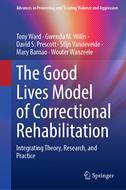



The book examines the Good Lives Model (GLM) of correctional rehabilitation and its dual aims of risk reduction and well-being enhancement for individuals who have committed crimes. It describes the use of individuals’ prioritized values in intervention plans and to capitalize on and further develop their strengths and reduce the risk for future offending. The book directly addresses the differences between purely risk-oriented rehabilitation correctional models (e.g., Risk-Need-Responsivity Model) and strength-based approaches (e.g., GLM) and the clinical advantages of using the latter. It updates the GLM in the context of recent work in evolutionary biology, quality of life and well-being, cognitive neuroscience, developmental psychology, human rights, naturalistic ethics, criminology, desistance research, and theoretical reformulations of dynamic risk and protective factors. Case studies illustrate the detailed application of GLM evidence-based practice plans to adults convicted of crimes and demonstrate the effectiveness of GLM intervention strategies. Key areas of coverage include: GLM community and within-prison intervention strategies. Incorporating dynamic risk factors into GLM case formulations. Incorporating desistance research in postrelease planning and practice. Policy implications of the GLM. The Good Lives Model of Correctional Rehabilitation is a must-have resource for clinicians, therapists, and other professionals as well as researchers, professors, and graduate students in developmental psychology, family studies, forensic psychology, criminology/criminal justice, public health, psychotherapy/counseling, psychiatry, social work, educational policy and politics, health psychology, nursing, and behavioral therapy/rehabilitation.
-
Autore:
-
Anno edizione:2025
-
Editore:
-
Formato:
-
Lingua:Inglese
Compatibilità:
Tutti i dispositivi (eccetto Kindle) Scopri di più
Layout:
Reflowable
EAN:
9783031955594

Formato:
Gli eBook venduti da Feltrinelli.it sono in formato ePub e possono essere protetti da Adobe DRM. In caso di download di un file protetto da DRM si otterrà un file in formato .acs, (Adobe Content Server Message), che dovrà essere aperto tramite Adobe Digital Editions e autorizzato tramite un account Adobe, prima di poter essere letto su pc o trasferito su dispositivi compatibili.
Cloud:
Gli eBook venduti da Feltrinelli.it sono sincronizzati automaticamente su tutti i client di lettura Kobo successivamente all’acquisto. Grazie al Cloud Kobo i progressi di lettura, le note, le evidenziazioni vengono salvati e sincronizzati automaticamente su tutti i dispositivi e le APP di lettura Kobo utilizzati per la lettura.
Clicca qui per sapere come scaricare gli ebook utilizzando un pc con sistema operativo Windows
