


EBOOK IN LINGUA STRANIERA




The Quadriga at the Brandenburg Gate

5,99 €
+60
punti 
Venditore: Feltrinelli

Acquista online
Scaricabile subito
Articolo acquistabile con Carta del Docente

Articolo acquistabile con Carta Cultura Giovani e Carta del Merito

Articolo acquistabile con Carta della Cultura

Dati e Statistiche
 Salvato in 0 liste dei desideri
Salvato in 0 liste dei desideri
The Quadriga at the Brandenburg Gate
Scaricabile subito
5,99 €
5,99 €
Scaricabile subito


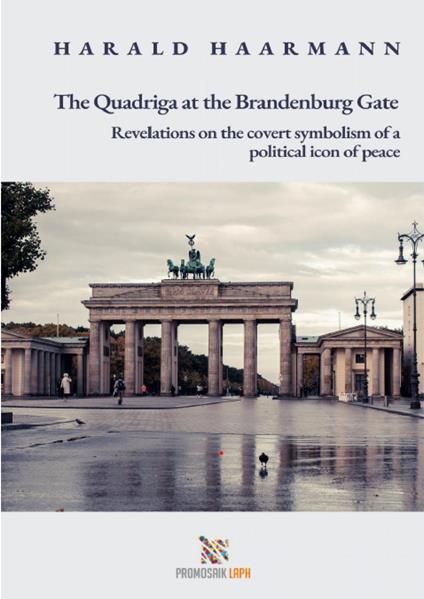
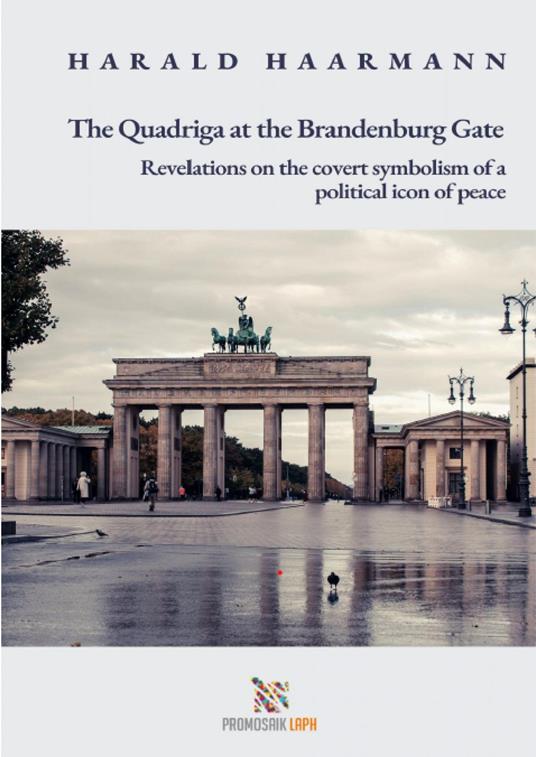
The Brandenburg Gate holds iconic value for Berlin, much like the Eiffel Tower for Paris or Tower Bridge for London. This icon symbolizes peace and political reconciliation in Europe. As a consequence, its image connects to the original function attributed to the monument as a 'Gate of Peace' in the late 18th century. However, the Brandenburg Gate has also served as a political icon of the Prussian nation-state and an expression of Prussian militarism. This contradiction is particularly evident in the changing decoration of the Quadriga, the four-horse chariot made of copper. This study of Prof. Harald Haarmann is the first to interpret and explain this contradictory symbolism at a historical and political level. A female figure from ancient mythology appears as the charioteer, associated with the ceremonial chariot of the Quadriga. Originally, the chariot had no connection to female deities. This connection is an innovation in cultural history, arising in the contact environment where the tradition of an Indo-European warrior caste merged with the cult of goddesses of Old European (i.e., pre-Indo-European) origin. Since such a fusion in early antiquity, women have also been associated with the chariot, concretely as warriors and symbolically in the form of protective goddesses. The Greco-Roman tradition of ancient mythology is familiar to us through the canon of our Western reception history. The other cultural current in Greek 'disguise' is much older than Greek antiquity. It reflects traditions from the pre-Greek cultural epoch. This older tradition of Old European civilization has only been documented through recent research, and the findings are still little known in art history. Harald Haarmann (born 1946) is a renowned German linguist and cultural scientist. Based in Finland, he serves as director of the European branch of the Institute of Archaeomythology. He is widely known for his extensive research on the ancient civilization of Old Europe.
-
Autore:
-
Traduttore:
-
Curatore:
-
Anno edizione:2026
-
Editore:
-
Formato:
Lingua:
Inglese
Compatibilità:
Tutti i dispositivi (eccetto Kindle) Scopri di più
Layout:
Reflowable
EAN:
9783565573882


Formato:
Gli eBook venduti da Feltrinelli.it sono in formato ePub e possono essere protetti da Adobe DRM. In caso di download di un file protetto da DRM si otterrà un file in formato .acs, (Adobe Content Server Message), che dovrà essere aperto tramite Adobe Digital Editions e autorizzato tramite un account Adobe, prima di poter essere letto su pc o trasferito su dispositivi compatibili.
Cloud:
Gli eBook venduti da Feltrinelli.it sono sincronizzati automaticamente su tutti i client di lettura Kobo successivamente all’acquisto. Grazie al Cloud Kobo i progressi di lettura, le note, le evidenziazioni vengono salvati e sincronizzati automaticamente su tutti i dispositivi e le APP di lettura Kobo utilizzati per la lettura.
Clicca qui per sapere come scaricare gli ebook utilizzando un pc con sistema operativo Windows
